
A film composer is part musician, part filmmaker, part psychologist, and part translator. If you’re a film director who’s never worked with a composer before — or you have, and it didn’t go the way you hoped — understanding the job a little better can help you make the right hire and get more out of the collaboration. After all, handing over your baby to a composer means trusting them to help finish telling the story. A film composer holds a powerful paintbrush in their hand, but the picture is yours — we want to bring the director’s vision to life.
The Role and Responsibilities of a Film Composer
At the most basic level, a composer writes original music that’s built to fit specific moments in your film: cues, or purposeful pieces of music timed to picture. Some cues are thirty seconds, some run ten minutes. Every one of them has a job to do in their scene, and that job is certainly not just to “fill in the space” or “make it sound nice.”
Music is one of the few tools in filmmaking that talks straight to the audience’s nervous system without stopping to go through their conscious brain first. A shot of someone walking down a hallway might be neutral. Add the right cue and it’s dread. Add a different cue and it’s triumph. Add nothing and it’s just… a hallway. That’s the impact a score has, and it’s why the choices we’re making as composers are doing real narrative work — not purely decoration, not just garnish on the plate.
Here’s the part that surprises first-time filmmakers: we can only go so far without fully understanding the intention behind a scene. It may be perfectly clear to the director, but not necessarily to the audience — and until there’s music there, the composer is still just another audience member, trying to figure out where the scene is going. Most of the time it’s no mystery, but in some scenes — it is! (Especially in mystery movies, actually!) Why is this scene shot this way? What is the character hiding? Where should the audience’s sympathy lie? A composer without direction has to become their own director, and while we have pretty good instincts, we’d much rather use them in service of your vision than accidentally start creating our own.
When and How to Bring a Composer Onto Your Project
Many first-time filmmakers bring a composer on at the very end — the picture’s locked, the deadline’s looming, and suddenly it’s “now we need original music.” The instinct makes sense chronologically, but if you can involve your composer earlier, while you’re still in the edit, you’ll usually get a better score and a smoother process.
Why? Because scoring is the musical aspect of that new world being created in the movie. That world doesn’t exist anywhere but in the movie. And just like anything unique, it needs some time to develop and bake into something special. Some directors are also thankful to have the composer serve as one of the earliest audience members, and be another fresh pair of eyes, to either share their opinion or, better yet, suggest ways for the cut to work with musical ideas already brewing before the picture is locked.
Also, during the editing phase, most likely the editor has already placed some temp music in the timeline, and it’s an opportunity to start discussing the efficacy of the temp track before everyone falls in love with it (“temp love”) despite it not being so right for the scene. Cutting to temp music (often borrowed music from other films) is a completely normal part of the process, and it’s genuinely useful for communicating tone: if you show me a scene temped with something moody and sparse, I know a lot more about your intentions than if you’d just told me “make it oblique.” The risk is when a director or the whole room falls in love with the temp and, without meaning to, starts asking their composer to reproduce something only because they got used to it. If you’re using temp, treat it as a mood board, not a target to hit note-for-note — and say so out loud to your composer. That’ll change how we approach the assignment.
As for finding the right person, a composer’s demo reel will tell you more about their range and instincts than their resume will. Look for someone whose work speaks to you, but also listen for versatility. You may love what a composer does with a dramatic scene, but can they also handle something intimate, funny, tense, strange, or completely unexpected? Some composers are brilliant at big orchestral action, some are perfect for a quiet character drama, while some have developed their abilities to cover the entire range. More importantly, you’re looking for someone whose musical instincts feel right for your film — and someone you can imagine having a good creative conversation with.
Collaboration with Your Composer: The Director-Composer Relationship
The most fulfilling scores I’ve worked on came out of relationships where the director treated the process as a genuine creative collaboration. This doesn’t mean you need to know anything about music theory — it means treating the composer as a creative partner, in the sense that we both have a part in creating something here. That means talking about tone, references, and story intent in plain language.
This collaboration usually kicks off with something called a spotting session — where a director and a composer sit down together and watch the cut, deciding scene by scene where music should start, where it should end, where there shouldn’t be any music at all, and what each cue needs to be doing emotionally. It sounds simple, and sometimes it is, and sometimes it’s just plain technical (cue starts here, ends here…), but it’s also important because it sets the map for everything that follows. We don’t want to spend precious time scoring a scene a certain way when the director either didn’t even want music there (yes, that happened to me) or wanted the music to steer the audience in a completely different direction than was so obvious to me at first (next time I’ll read the notes again before starting the next cue).
To get the most out of a spotting session, come prepared to share your instincts, even if you can’t quite put them into musical terms. Point to a specific shot and say “this is the point where dread should really kick in” or “I want this scene to feel like it’s holding its breath.” That kind of language is gold to us composers. Sometimes directors find it hard to articulate what they want, and that’s certainly understandable — so simply throw out anything that comes to mind, even if some words sound contradictory, or you regret saying them — we’ll decipher it eventually. Sometimes saying anything is better than nothing. Sometimes, though, if you’ve worked with someone before, saying something like “you know what to do here” is totally fine as well, and feels just as right.
What Happens After the Spotting Session: The Composition Process
Once spotting’s done, the writing begins — and this is where a lot of filmmakers lose visibility into the process, so let’s pull back the curtain a bit.
Depending on the size of the project, the amount of music, and the way the score is being produced, composing can take anywhere from a couple of weeks to several months. Budget enough time for it in your post-production schedule from the start — scoring is something that often gets squeezed at the tail end of a project, and rushed scores have a way of sounding exactly like what they are: rushed.
Sometimes the first cue you hear isn’t the final product — it’s a demo, or what we often call a mockup. Mockups are usually built with sample libraries and software instruments, and at times will be barely a solo piano, for the sake of starting the conversation, not establishing a particular sound. Sometimes it’ll be a little more fleshed out. If your project has the budget for live players, that demo is the blueprint that gets built out into a full recording later. For example, that guitar line in the demo — it may sound slightly unnatural now, but it’ll get replaced during the recording session and sound great. If it’s an all-virtual score, the demo evolves directly into the final mix through a few rounds of polish.
These days, professional composers can make their mockups sound remarkably polished and complete. So unless a live recording session is scheduled, what you’re hearing may already be very close to the final sound — and that’s intentional. We don’t want to make you listen to something half-finished just because we technically could polish it later. We want you to hear the cue with a bang and experience it as close as possible to the way we heard it in our heads when we wrote it.
Don’t be surprised if your composer sends you something that sounds incredibly dialed-in and calls it a mockup. If we’re feeling confident about a cue, we’d rather show you the idea in its full glory than ask you to approve a rough version and promise that it’ll sound better later.
So if you’re not sure whether what you’re hearing is a sketch or close to final, ask — it’ll save you from reacting to a rough guitar line like it’s the finished score.
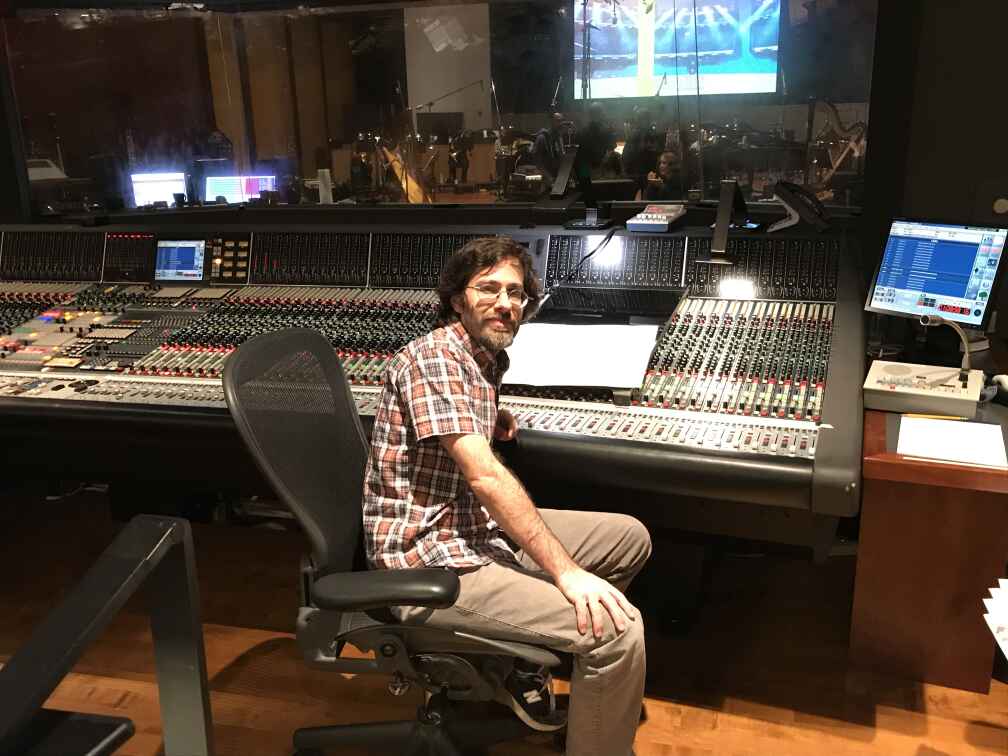
Once cues are approved and the score calls for live players, we move into a recording session. This is where the music comes to life — real musicians, a scoring stage, a conductor, and a recording engineer capturing the final, human performance. Directors are welcome to attend; it’s thrilling and one of my favorite parts of the process. Even with a small ensemble, the difference between a mockup and live players can be night and day. The key is timing: once we’re recording, changes become expensive, so clear communication earlier in the process keeps the session focused and fun.
Giving Effective Notes: How to Talk to Your Composer About Music
You don’t need to know what a “diminished chord” is to give useful notes on a score. The most productive feedback comes from directors, sometimes with zero musical background, who simply talk about the story and feeling, instead of feeling like you need to tell the composer what chord, scale, or instrument should change.
Feel free to use references. “This reminds me of the quieter parts of [a film you love]” tells a lot more than “make it less busy.” Use language tied to story, not just abstract mood words — instead of “make it bigger,” try “I need the audience to feel like she’s not going to get out of this.” And if you really want to be effective — point to specific moments. A cue is rarely wrong in its entirety; usually it’s one section, one phrase, one transition that’s off, and telling a composer exactly where saves so much headache, heartache, and most importantly — time.
Revisions are normal. Though we try, we understand that we won’t ace it every single time. Some notes may address the ending, or a section within a cue, and some notes will simply be that we got it all wrong (or we’re too fast, or too slow, or too dense, or too… much?). If you’re a director and the music is changing how you envisioned the scene, sometimes you’ll have a hard time explaining why — don’t worry, just say, “this isn’t working for me.” You don’t necessarily need to diagnose the musical problem or come up with the solution. Oftentimes, we already have an idea of what needs to change; we just needed to see your reaction to what we tried. Did we pull it off? No? Let us know either way.
So yes, notes are part of the process — just make sure you give them early enough that there’s time to act on them before the recording session. Notes given after a cue’s been fully orchestrated and recorded with live players are expensive, sometimes prohibitively so. So when you say “something feels off here,” we’d rather hear that early on.
Choosing a Musical Style and Voice for Your Film
Film scores aren’t limited to sweeping orchestras — that’s just the version people default to picturing. A score can be built from rock instrumentation, jazz, folk, electronic textures, world instruments, or some hybrid that nobody’s quite tried before. The right choice depends on your film’s period, setting, and tone, and it’s a creative decision worth having a conversation about early. Have you been toying around with interesting genres for your movie? Share them with the composer and see where you both can take it. I worked on a movie once, set in New York City, where the director wanted Andean music running through it — he’d grown up with it, and the film opens with an Andean band playing music in the subway. It was such a treat to explore and try something different.
In most cases, a composer will work early on to establish the musical tone and share their findings with you. However, if you’ve got some ideas of your own — I’m all ears! If you have specific tracks to play — I’d love to hear them. If you have movies to reference — please do. If you have general thoughts about the music — please don’t hold back; share them. Why keep your great ideas to yourself? You may hold the key to something quite original and fun! It doesn’t necessarily mean we’ll sound like that avant-garde Stockhausen recording you shared during our early sessions; I can use it as a compass, not a template to copy.
Budget, Rights, and Practical Considerations for Filmmakers
When it comes to money, some filmmakers find out about this part the hard way. A score’s cost isn’t just the composer’s fee — if you want live musicians or a full orchestra, you’re also budgeting for an orchestrator, copyist, recording session with players, a studio or scoring stage, and a mixing engineer. That’s a very different cost structure than an all-virtual score built with sampled instruments, which can sound excellent for a fraction of the cost, depending on genre and scale. Talk about this honestly with your composer up front. A good one will tell you what’s realistic for your budget instead of promising you a live orchestra sound on a sample-library budget.
Rights and ownership are the other piece people skip past until it becomes a problem. Who owns or controls the score once it’s written? Can you use it beyond this film — in a trailer, a sequel, a different cut down the road? Is the composer working for a flat fee, or is there talk of royalties or backend points? None of this should be left to a handshake understanding. Get it in writing, and if the project is anything beyond a small passion piece, consider having an entertainment lawyer review the agreement.
The Impact of Music on Your Story: Why This Collaboration Matters
Here’s what I actually love about this job: taking a scene that isn’t quite telling its story yet, and watching the music make it whole. I’ve sat through cuts that were slow, one could even say a little boring, where everything on screen made sense, and nothing was technically wrong, but the scene just wasn’t landing. Then, when we finally get to score the moment, it finds its rhythm, its emotion, its original intention — its message. The music didn’t just decorate it — it was the missing piece all along. Without it, that scene wouldn’t make it.
A recurring theme or motif tied to a character is one of the most underused storytelling tools available to filmmakers, and it’s something you can ask for directly. A short musical phrase that returns, slightly transformed, every time we see a particular character can do enormous quiet work over the course of a film — building recognition and emotional shorthand without a single line of dialogue. It’s the kind of thing audiences feel long before they consciously notice it, and it’s the kind of idea that tends to surface through real collaboration — a director and composer building on each other’s instincts.
That’s really the throughline of everything above: while you could hand off a brief and get a finished score back, the most effective and rewarding experience comes from a genuine collaboration — a composer and a filmmaker respecting each other, approaching the process with an open mind, and letting the conversation turn into music.
About Gad Emile Zeitune
Hollywood film composer Gad Emile Zeitune specializes in orchestral and hybrid scoring, composing original music for film and contributing additional music to major studio and streaming projects. A graduate of USC’s Scoring for Motion Pictures and Television program, he bridges traditional orchestral composition with modern studio production across genres including thriller, sci-fi, horror, and comedy.
FAQ
What does a film composer actually do?
A film composer writes original music — called cues — timed to specific moments in a film, working closely with the director to shape mood, pacing, and emotional intent. The job goes beyond composing notes; it includes interpreting the director’s vision and translating story intent into music.
When should a director bring a composer onto a project?
Ideally during the edit, not after picture lock. Composers who join earlier can respond to the film as it evolves, and it gives both sides time to work through the temp track — the placeholder music often already cut into the timeline — before it becomes a hard-to-shake reference point.
What is a spotting session?
A spotting session is when the director and composer watch the cut together and decide, scene by scene, where music starts, where it ends, where there should be no music at all, and what tone each cue needs to carry. It’s typically the first formal step after a composer joins the project.
What’s the difference between a mockup and the final recorded score?
A mockup (or demo) is an early version of a cue, often built with sample libraries or a solo piano, used to communicate an idea before any live musicians are involved. If the score calls for live players, that mockup becomes the blueprint for a recording session with a conductor, musicians, and an engineer — a step that can significantly change how a cue ultimately sounds.
How should directors give notes on a score?
Effective notes are usually about story and feeling, not music theory — pointing to a specific scene or moment and describing what should change emotionally, rather than diagnosing the musical fix. Timing matters too: notes given on a mockup are inexpensive to act on; notes given after a cue has been fully orchestrated and recorded are not.
What should filmmakers budget for beyond the composer’s fee?
For a live score, costs can include an orchestrator, copyist, recording session, musicians, a scoring stage, and a mixing engineer — a different cost structure than an all-virtual score built from sample libraries. Composers can typically advise on what’s realistic for a given budget.
Who owns the score once it’s written?
Ownership, usage rights (trailers, sequels, future cuts), and compensation structure (flat fee vs. royalties or backend points) should be defined in writing before scoring begins, not left as an informal understanding.